What a Casino-Style Venue Description Leaves Open
A casino-style venue description can sound vivid yet stay vague. Learn which details confirm what’s on offer and what to ask before you go.
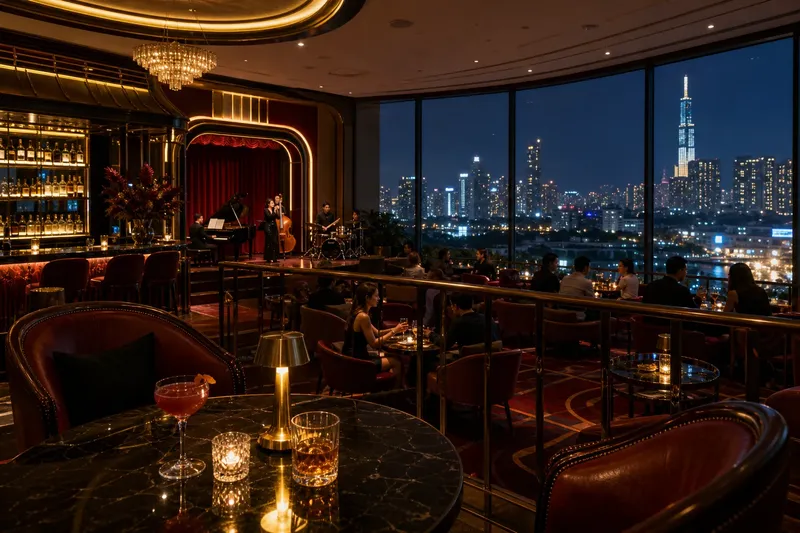
Does “casino-style” mean card tables, themed decor, or simply a lively lounge? A casino-style venue description in Bình Thạnh can point toward a mood without naming the activities behind it. The useful question is not whether the wording sounds exciting, but what kind of experience the words actually describe.
What does “casino-style” describe?
The phrase can refer to visual design, stage entertainment, social games, or an overall sense of spectacle. It does not, by itself, establish that a venue offers gambling, prizes, or any particular game. Look for the nouns around it: “roulette-inspired decor” describes a theme, while a named game area describes a space, though not necessarily its rules or access conditions.
Adjectives such as “glamorous,” “exclusive,” and “high-energy” work differently. They suggest a tone. They may help you imagine whether a space feels polished or bustling, but they do not identify a service, room, event, or game.
Read the phrase as a clue about presentation, not a complete inventory.
Which words point to an actual feature?
Concrete wording gives you something identifiable: a restaurant by name, a lounge, a scheduled performance, or a stated admission condition. A broad phrase such as “premium entertainment” leaves the format open. Even a named feature may need context; “live music” does not tell you which night it takes place.
Use this quick reading list. For each item, note what the description says and make the decision that follows:
- Named activity: If a specific game or performance is named, treat that format as stated; if only “entertainment” appears, do not assume a particular activity, and look for a program.
- Named space: If the copy identifies a lounge or dining room, consider it a stated venue feature; if it only says “vibrant setting,” treat the room type as unknown.
- Schedule: If dates or operating hours appear, use them as the listed timing; if timing is absent, ask about your intended visit rather than assuming the feature is available.
- Access conditions: If an age, admission, or reservation policy is stated, follow that condition; if none appears, check the venue’s policy before relying on access.
- Included service: If the wording says a service is included, read it as a direct claim; if it says “inspired by” or “designed for,” treat that as theme or intent, not a service promise.
- Location: If an address or clearly named area appears, use that specific location in your plans; if the copy names only Bình Thạnh, check the venue listing for its actual address.
These distinctions are especially useful when a description blends a named amenity with a thick layer of atmosphere. Keep the amenity and the mood in separate mental boxes.
How should you read the description for your plans?
Start with the reason you are considering the venue. A person interested in a particular game needs the game name and access information. Someone seeking dinner needs a dining option and details that help judge whether it suits the occasion. A group arranging a meeting may care more about seating and noise than about the venue’s theme.
Say you are planning an evening with a friend who wants dinner and a quiet place to talk. Imagine the listing names a restaurant but describes the venue as “vibrant,” with no seating or sound details. You record the restaurant as a stated feature, then check its current information or ask whether quieter seating is available. If the answer names a quieter area, you can weigh that option; if the response stays general, you know the dining claim does not settle the conversation question.
That is a more useful decision than trying to decode “vibrant” as either loud or calm.
What questions do readers ask about casino-style venue descriptions?
Does “casino-style” mean gambling?
No. The phrase can describe decor or entertainment as well as game formats, so it does not establish that gambling is offered. Look for an explicit description of the activity and its conditions.
Does “exclusive” tell me who can enter?
Not on its own. The word conveys a sense of status, while admission rules need to be stated separately. Check the venue’s access policy if entry matters to your plans.
Can “live entertainment” tell me what happens on a particular night?
Only if the description gives a relevant schedule or event listing. Without that, the phrase names a type of offering but leaves the timing and format unclear.
What should I make of “all-night entertainment”?
It signals a broad promise, but does not specify the activity or its hours in detail. Look for a program or ask what is scheduled during the time you have in mind.
How can you compare two descriptions without confusing mood and features?
Compare the same kinds of claims. Put named amenities beside named amenities, policies beside policies, and atmosphere words beside atmosphere words. A rich description may feel more informative than a concise one while leaving the practical details just as unclear.
- Stated: The listing names a feature, service, or condition.
- Suggested: The language evokes a mood, theme, or level of prestige.
- Unanswered: A detail you need is missing, such as a schedule, game format, or access rule.
For example, a named dining room and a named lounge are comparable features; “luxurious” and “energetic” are descriptions of mood. If your choice depends on a specific activity or condition, an evocative phrase cannot settle it.
When does a phrase need more context?
Pay attention to words that sound definite but leave important details unstated. “Available” may not tell you when. “Included” may need an explanation of what the service covers. “For everyone” may not spell out admission conditions. These phrases can be useful, but their scope depends on the surrounding description.
Check the venue’s current page, event calendar, menu, or visitor policy for the detail in question. If the wording still leaves room for interpretation, ask one narrow question, such as whether a named activity is scheduled on the evening you are considering. For conditions tied to a particular listing or local rules, consult the relevant operator or official source.
With a casino-style venue description, separate what it names from what it evokes. That distinction helps you enjoy the imagined atmosphere while keeping your plans anchored to the features and conditions actually described.